
"fruit in coffee"
51000 article(s) found

Treatment of Coffee Fruit and Coffee beans
The solarization process can also be called a natural process, which is basically the oldest, simplest, and requires the least mechanical tools. The first step is to sort and clean it up first. Immature, overripe, damaged coffee fruits will be singled out first. At the same time, the branches, leaves, mud and stones mixed in the fruit will also be removed. Sieves are usually used to deal with this preliminary

Artificial Hybrid Variety-Gold Cardoba Coffee Flavor Description Taste Characteristics Roast Degree Variety Price
Kaduai trees are relatively low, and compared to other coffee trees, kaduai fruits grow stronger and are difficult to pick. The fruit is both red and yellow. So far, yellow fruits have not been found to taste better than red fruits. On the contrary, some people found in the cup test that although the acidity of some yellow fruits was good, the coffee tasted cleaner than the red fruits.

How does Fapa Camara taste after dry sun treatment? orange Fruit Manor selection Coffee Bean selection process
For the exchange of professional baristas, please follow the coffee workshop (Wechat official account cafe_style) El Naranjo Dipilto. Orange Fruit Manor (Best of Nicaragua winning Manor | Award record: 2016. 1st place) non-water sun treatment Nicaraguan Coffee Variety: Pacamara/ Pacamara Manor owner: Luis Emilio Valladarez Zelaya producing area: Nu

How about spruce red fruit manning? is spruce red fruit coffee good? what does spruce red fruit mean?
Professional coffee knowledge exchange more coffee bean information please follow the coffee workshop (Wechat official account cafe_style) Mandheling spruce red fruit Mantenin country: Indonesia Indonesia production area: Tawa Lake Lake Tawar varieties: Arabica Mantning Arabica Mandheling treatment: wet planing Wet Huling altitude: 1350-1500m flavor: red

How to become a boutique coffee bean how to choose a boutique coffee bean?
When the bean has a good variety, planted in the area most likely to breed fragrant elves, but also has the careful care of coffee farmers, thrive and fruitful. BUT! Not all red fruits can become a boutique coffee bean! Today, let's talk about what kind of experience this magical fruit has to go through in order to become a boutique coffee! First of all, it must be mature.

A brief introduction to the flavor, taste and aroma characteristics of Kenyan coffee manor
In addition to having obvious and charming fruit acidity, Kenyan coffee is mostly from small coffee farmers, planted in a variety of different environments, encounter different climate and rainfall every year, and bring a variety of distinct and unique personalities. Take the AAPlus grade KenyaAA+Samburu as an example, the 2001 Samburu has a strong black plum flavor, low acidity and strong taste, and was newly harvested in the winter of 2002.

Common sense method of Coffee invents the Frozen Storage method of small Fruit Coffee Seeds
The French Development Institute has recently successfully invented a method of long-term frozen storage of small fruit coffee seeds, which provides a reliable means for establishing a small fruit coffee seed bank and protecting biodiversity. Coffee belongs to Rubiaceae evergreen shrubs or small trees, mainly produced in tropical areas, there are small fruit coffee, medium fruit coffee and large fruit coffee and so on. Small fruit coffee is native to the Arab region and is currently grown in the world.
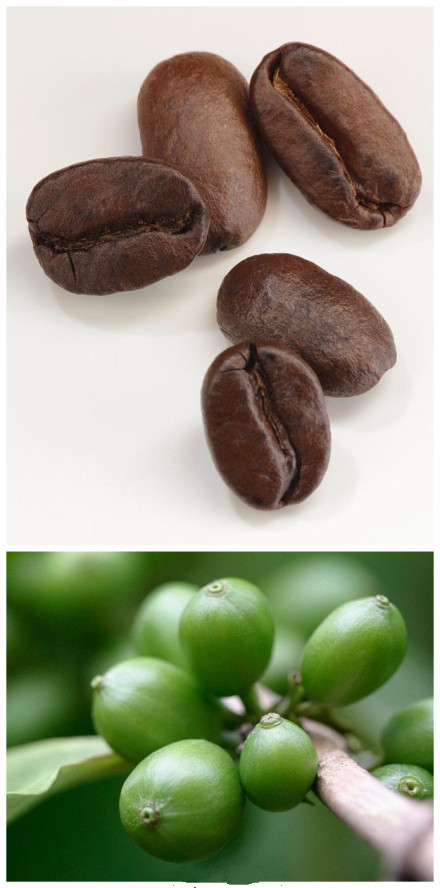
When will the coffee fruit be picked?
Coffee trees usually blossom in 3-4 years, about 2-3 months a year, and their appearance and smell are similar to those of jasmine. when they bloom, they grow in clusters on the branches and bloom for 3-5 days. After the flowers bloom, they bear small green fruits, which ripen and turn red into ripe fruits that can be picked after a few months. The skin of ripe fruit is red. Because its shape and color are similar to cherries, ripe coffee fruit is called coffee cherry in many places.
Coffee training basics-from fruits to raw coffee beans
Coffee training basics-from fruit to raw coffee beans: a coffee tree can harvest 3-5 kilograms of fruit, and raw coffee beans account for 5% of the fruit quality. Going from fruit to raw coffee beans is really a time-consuming and laborious task. Arabica and Robusta Arabica coffee account for about 2% of the world's coffee production. The plant is not suitable for high temperature, low temperature, more rain and less rain.
The growth of coffee trees
The growth and fruit of coffee trees varies with different varieties / environmental conditions. In the high altitude area of Yunnan, the small seed coffee cultivated has the advantages of cold climate, large cloud cover, short light and slow plant growth, but the branches develop into sturdy backbone branches after the first branch bears fruit, and the second / third branch has strong ability to produce. The growth is exuberant and the fruit is dense, which is the main fruiting branch, so it is suitable to adopt single trunk shaping. Two / three

Vivetna Fruit Fruit boutique Coffee detailed flavor and taste description of European royal coffee Vivetna fruit
Located in Guatemala, Latin America, the coffee beans are mainly famous for the high-altitude coffee beans of HueHuetenango, which are of good quality, full-bodied and full-bodied, and are favored by the European royal family. She has a balanced richness, acidity and smoky taste, and the taste is rich and varied. Slightly special south fruit, mainly fruity and high-quality sour taste, others such as nuts,
This summer's brightest "fruit coffee" refreshing and reassuring
reporter jin wufeng/taichung what sparks will be emitted when litchi meets coffee? Ou Ke Lao Cheap Coffee Shop combines Taiwan's seasonal fruits to develop a different fruit coffee. The entrance is a natural fruity interwoven coffee flavor, bringing a new flavor to the taste buds. In the hot summer, we want to make everyone drink refreshing and at ease. Toxic starch storm swept across Taiwan, making many people want to eat a bowl of ice and drink a cup of pearl milk tea

Flowering and fruiting cycle of Coffee Tree-- introduction to the processing process from Coffee Fruit to Bean
The flowering and fruiting cycle of coffee trees-- an introduction to the processing process from coffee fruit to beans. 1. Dry method: fresh fruit is dried or dried, peel and seed coat are removed by sheller, and impurities are sieved. 2. Wet method: this method is used for mass production. Peel the fresh fruit with a peeling machine, separate the bean grains from the peel, soak the peeled beans in water, wash, dry, and then remove them.

Columbia Coffee Columbia Pine Manor introduces what is anaerobic dried fruit solarization
Professional coffee knowledge exchange more coffee bean information please follow the coffee workshop (Wechat official account cafe_style) the front street coffee Columbia Antioquia pine manor introduction Colombia Los Pinos Estate Anearobic Natural Colombian Antioquia pine manor fruit brew anaerobic fruit dried sun Coffees Profile fruit brew, this is a 201
You must know the knowledge of raw coffee beans what is the difference between the methods of handling raw beans
Where did the coffee come from? The common coffee beans are coffee beans that can be brewed into coffee after being processed and roasted. But many people may not know that coffee beans are the essence peeled off by layers of coffee fruit, that is, the seeds of coffee cherries (commonly known as coffee cherries because they look like cherries). The third from the right is the maturity that can be harvested. Oh, overcooked or overripe.

The picked ripe fruit of coffee has a red skin.
Coffee trees usually blossom in 3-4 years, about 2-3 months a year, and their appearance and smell are similar to those of jasmine. when they bloom, they grow in clusters on the branches and bloom for 3-5 days. After the flowers bloom, they bear small green fruits, which ripen and turn red into ripe fruits that can be picked after a few months. The skin of ripe fruit is red. Because its shape and color are similar to cherries, ripe coffee fruit is called coffee cherry in many places.

A brief introduction to the History and Culture of the Origin and Development of the artificial Hybrid Golden Kaduai Coffee
Kaduai tree species are relatively low, compared with other coffee trees, the fruit of Kaduai is stronger and harder to pick. The fruit is both red and yellow. So far, it has not been found that yellow fruit tastes better than red fruit. On the contrary, some people found in the cup test that although the coffee treated with some yellow fruits has good acidity, the taste of the coffee is cleaner than the red fruit.

Dry Proces Coffee Bean Solar process explain the characteristics of Solar Coffee Bean
Professional coffee knowledge exchange for more information about coffee beans, please follow the coffee workshop (Wechat official account cafe_style) sun Natural Processed/Sundried/Dry process. By convention, before starting to look at the treatment, all readers need to have a basic understanding of the structure of the coffee fruit in order to know: which part has what effect? Which part is there?

What is coffee cherry cherry fruit the whole ripening process takes about how long
Do you know where the boutique coffee comes from? what are coffee beans? coffee beans actually come from ripe coffee fruits, which are also called coffee cherries. What is coffee cherries? Coffee cherries are the fruits or berries of coffee trees that grow in clusters along the short stems of the plant. Coffee cherries are usually about 6 inch (1.5 cm) long and start out light green.
Coffee fruit plantation
This 3-year-old Japanese girl, who speaks Mandarin in Yunnan, is always popular with farmers from all over the country. During the last picking season of coffee fruit, her parents Tian Daiju and Tian Daisi were the busiest. In this way, Tian Daihe has free space to haunt every corner of the coffee fruit manor. There are coffee fruits drying in the courtyard, these small white ones